
I'm published!
a sneak peek into Taking Up Space: The Womxn Run the Herd Story in Like the Wind magazine

I am so excited to share that my work is published - this time in print!
A feature on my Seattle-based running group, Womxn Run the Herd, was accepted for publication in it for the first-ever US edition of Like the Wind magazine. This article and accompanying photos by Somer Kreisman are only available in-print, and you can snag a copy here.
WORDS BY ELIZABETH BASTIAN – PHOTOGRAPHY BY SOMER KREISMAN
Womxn Run the Herd (WRTH) is not your typical run group. A weekend group run usually starts like this: someone will post “Anyone interested in a long run this weekend?”. Within hours there will be 30+ replies, coordinated carpools, a GPX route and a bakery selected for post-run bagels and coffee. Mileage and pace goals may differ, but the point is to be together.
WRTH formed as part of the broader Cowgill Trail Collective community in Seattle. Going on nearly three years strong, the group meets every Monday night at the Brooks Trailhead in Seattle for a no-drop or ‘party pace’ run or walk. Each run starts with a round of names, pronouns and an icebreaker question, ranging from “What’s your second favourite colour?” to “If you could combine two animals, which ones would you pick and why?”. Designated leaders and sweepers will review the route and identify themselves, and then they’re off.
The only rule? No one runs alone – because, as group member Sam Goldklang says, “It’s better to run together than to run fast.”
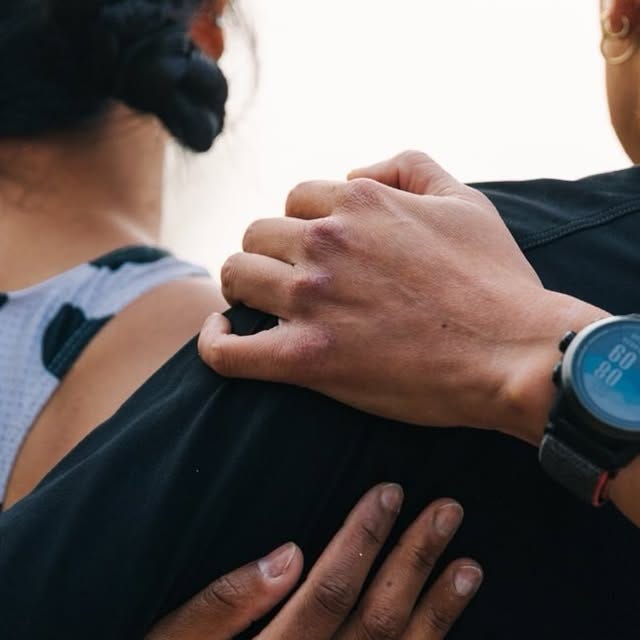
“I spent a few years with various trail running groups and it became very clear there was a lack of female faces in those circles,” says Sedona McNerney, one of the group’s co-founders. “In the past, I had been surrounded by female teammates and role models, and that was very meaningful to me. Now I found myself in these male-dominated spaces that could feel intimidating, I felt something was missing.” She notes that even as someone who identifies as ‘fit and fast’, she would often get dropped on group runs and find herself running alone.
“That wasn’t what I wanted – I wanted the community, I wanted the team aspect. I wanted an intentional space for women to get together and be in community through movement.”
Eventually, McNerney realised she had enough people who were also craving community to create something new. She pitched the idea to some existing running groups and physical locations, starting with a simple premise: meet at the same time and place, to share miles in a space that centres around women.
In addition to Monday nights, WRTH also hosts weekly urban trail runs, longer wilderness adventures in the summer and autumn, plus monthly ‘field trips’ to highlight different neighbourhoods and support women-owned businesses. In 2025, the group also planned and hosted multiple shoe demos, a backcountry adventure panel discussion, a first-aid-kit-making party, potlucks, craft nights and the group’s first-ever weekend retreat on Orcas Island.
“So many womxn have been pushing for visibility and inclusion in sport for years,” says Maria Iuliano. “To now be part of a space that is just for womxn – and such a large, vibrant one – feels so empowering.”
Read the rest of the story and check out the photos by ordering a copy of Like the Wind US edition #1 here. Thank you as always for your support!
good things on the internet
Tressie McMillan Cottom & Kate Manne in conversation at Princeton on GLP-1s, MAHA, eugenics, and aesthetic thinness as the new luxury status symbol 💬
currently reading
Hamnet by Maggie O’Farrell: No one told me this was a grief novel?! Slow to start but I got sucked in about a third of the way through.
The Poppy War Trilogy (The Poppy War, The Dragon Republic, and The Burning God) by R.F. Kuang: Another banger from R.F. Kuang. This one takes place in a magical-realism version of 19th century China, following main character Rin as she navigates war, power, and colonialism.
“Prior to 2008, the presence of empty properties could be put down to investment miscalculation. Now, real estate investment is in large part running on emptiness. Where vacancy used to be seen as a temporary condition that separated a building’s present from its future, it is now viewed as an investment in a building’s permanent present. Where it used to be a problem to be solved by an investor, it is now treated as the solution to an investor’s problems. In its terminal stage, the annexation of architecture by capital requires the exorcism of the human condition. As David Harvey put it in a 2016 lecture at Harvard Graduate School of Design: “It seems that we are less and less interested in creating cities for people to live in. Instead, we are creating cities for people to invest in.””
“First, these new designs seem slapped together by a mood board someone made on Pinterest (with AI turned on). Second, the branding screams “We didn’t read the books, but we think we get the vibe.” Maybe someone flipped through an old catalog, or asked their cool millennial sister for CliffsNotes on the original character’s stories. Either way, the result was something like this, a photo of Addy standing in a tobacco field.”
this week’s jam
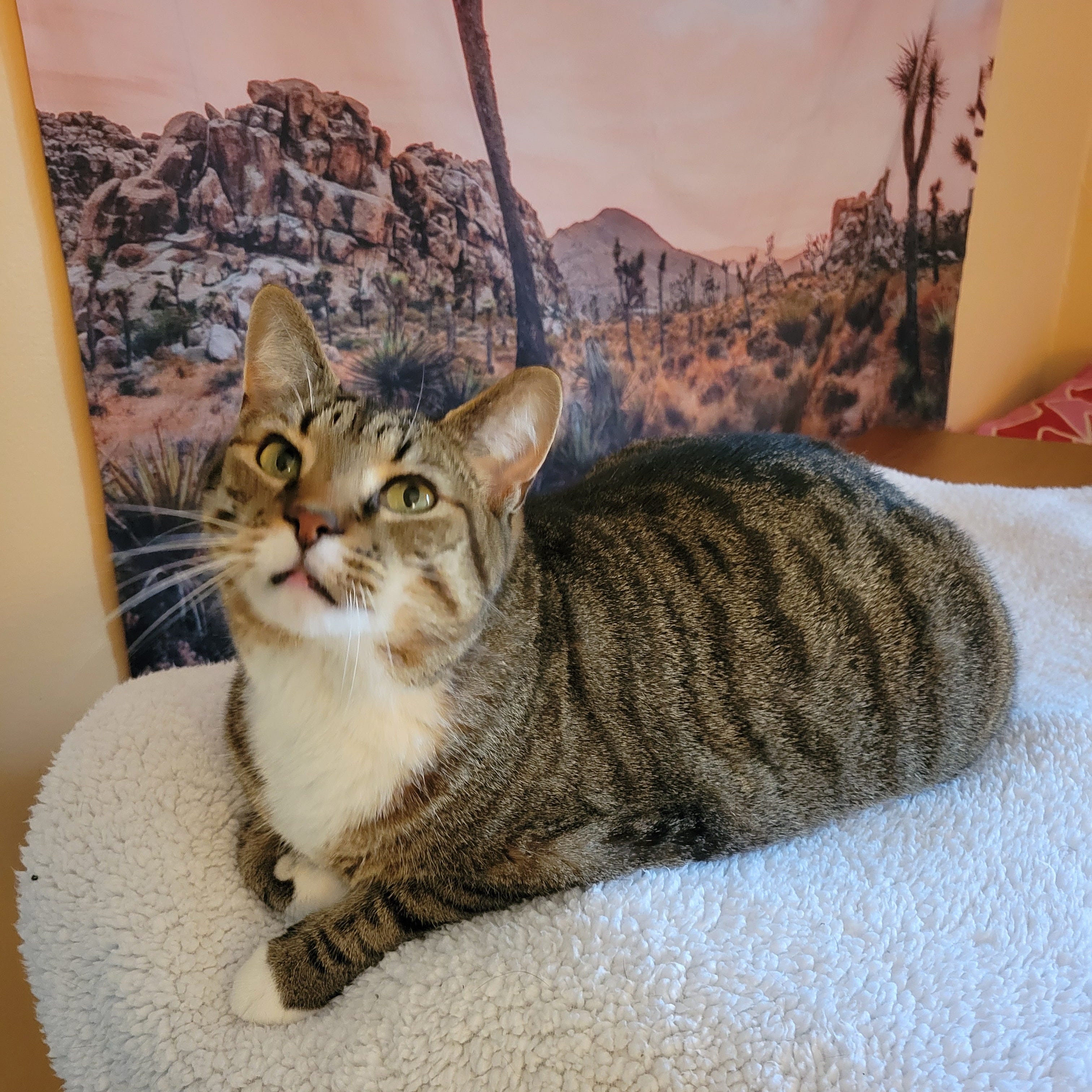
photo of my cats
Congratulations!!!!